
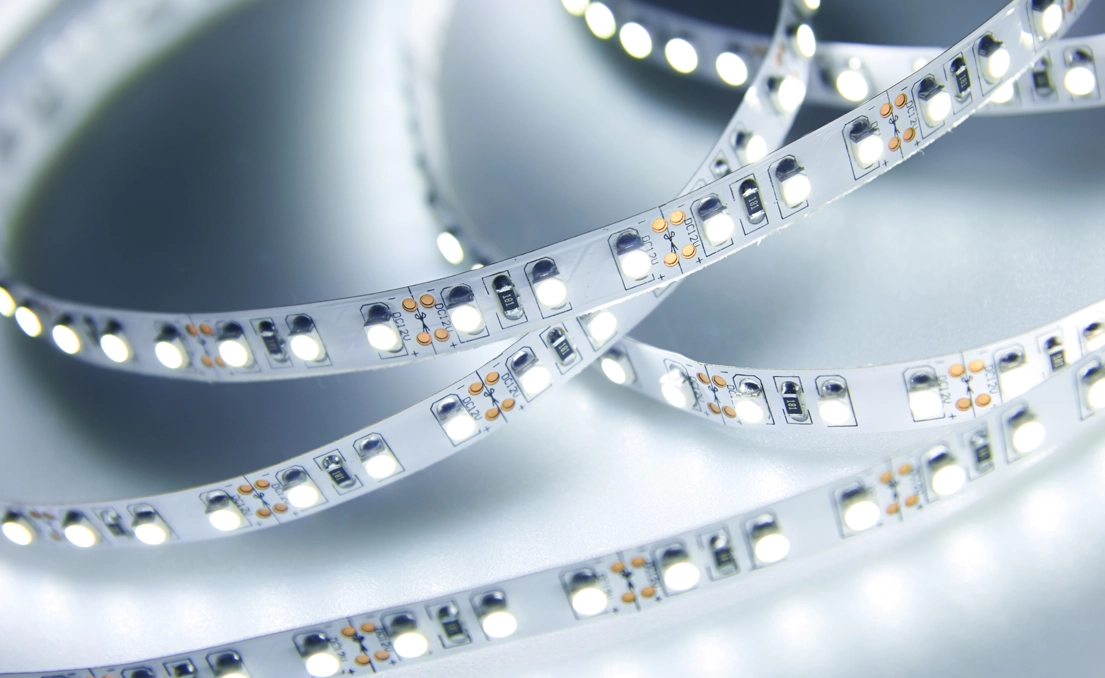
LED lighting is described using different parameters than traditional light bulbs, which is why understanding them is essential when choosing the right product. Lumens, watts, and kelvins directly affect user comfort and how well the light fits a specific space.
Knowing these markings helps avoid poor purchasing decisions and makes it easier to choose lighting that meets both functional and aesthetic requirements. Below, we explain the most important parameters used in LED technology.
What are lumens and why do they matter?
Lumens indicate the amount of light emitted by an LED source and show how bright a space will be. The higher the lumen value, the brighter the light, regardless of energy consumption.
In practice, this means that when choosing lighting for interiors, furniture, or workspaces, you should focus on lumens rather than wattage.
Example:
An LED light source with 800 lm provides brightness similar to a traditional 60 W bulb, with much lower energy use.
Watts as an indicator of energy consumption
Watts show how much electrical energy a light source uses during operation. They do not indicate brightness, only power consumption.
Thanks to LED technology, it is possible to achieve high brightness with very low wattage, resulting in real long-term savings.
Example:
A 10 W LED fixture can effectively replace a traditional 60 W light source while generating lower operating costs.
Kelvins and the impact of light color on interiors
Kelvins define the color temperature of light and determine whether it appears warm, neutral, or cool. Choosing the right color temperature directly affects the atmosphere and functionality of a space.
The Kelvin range makes it possible to precisely match lighting to the character and purpose of a room.
Example:
- 2000–3000 K: warm light, ideal for relaxation
- 3000–4500 K: neutral light, suitable for work
- 4500–6500 K: cool light, providing high detail visibility
CRI: how light reproduces colors
The CRI (Color Rendering Index) shows how accurately lighting reproduces colors compared to natural light. The higher the CRI value, the more natural colors appear.
This is especially important in places where color matters for practical or aesthetic reasons, such as kitchens, wardrobes, or furniture displays.
Example:
LED lighting with a CRI of 90 allows for more accurate color perception than standard sources with lower ratings.
Beam angle and light distribution
The beam angle defines how widely light spreads from an LED fixture. It determines whether the light is focused or evenly distributed over a larger area.
Choosing the right beam angle is important when planning both functional and decorative lighting.
Example:
- Choosing the right beam angle is important when planning both functional and decorative lighting.
- Wide beam: provides even lighting for larger spaces
LED lifespan and its importance in everyday use
Lifespan indicates the expected operating time of a light source and is given in hours. For LEDs, these values are much higher than for traditional bulbs.
Longer lifespan means fewer replacements and lower maintenance costs.
Example:
A light source with a lifespan of 30,000 hours, used for 5 hours a day, can last for over 16 years.
Luminous efficacy as a measure of efficiency
Luminous efficacy shows how many lumens are produced per watt of energy. This parameter helps assess how efficient a light source is.
The higher the efficacy, the more light is generated with less energy, which is beneficial both economically and environmentally.
Example:
An LED with an efficacy of 100 lm/W delivers 100 lumens of light per watt consumed.
Why choose LED lighting?
LED lighting combines high efficiency, long lifespan, and versatile applications. Thanks to a wide range of parameters, it can be precisely tailored to user needs and interior design.
Low heat emission, resistance to frequent switching, and a broad choice of light colors make LEDs suitable for both residential and commercial spaces.
How to make informed purchasing decisions?
A conscious choice of LED lighting is based on understanding basic technical parameters. This allows you to select solutions that are functional, energy-efficient, and suited to specific applications.
If you need support in choosing lighting for furniture or interiors, the Furnika team will be happy to help you find the right solutions. We invite you to contact us and cooperate with us.